The Great Refactor to Elastic Networks, Wan Runways & Agent Hunters
The Great Refactor to Elastic Networks, Wan Runways & Agent Hunters

When someone with GPU access and vibe coding skills can iterate faster and create more than traditional fashion structures, the question isn’t “why are you doing this?” but “why aren’t you?”
The simplest way to break it down is before and after the Lens Mainnet launch in April 2025. Before Mainnet went live, we pushed three major builds:
• TripleA— Agentic fashion marketplace with VeniceAI and automated dev funding pools.
• Lucidity— Agentic discovery for genAI video workflows w/ Livepeer ComfyStream.
• DIGITALAX Flagship— a ground-up refactor.
TripleA brought an entirely new set of smart contracts, a Rust engine, and an interface rebuilt from scratch, plus Venice integration for agentic on-chain remixing. Lucidity launched with custom smart contracts, an embedded agent chat layer, and a lean interface designed specifically for navigating Comfy workflows without friction. The Flagship got a complete overhaul.
Then in April, Lens Mainnet went live , and the second phase kicked in.
We began a full refactor across the rest of the ecosystem. That included upgrades to NextJS v15, Tailwind v4, new smart contracts deployed on Lens Mainnet via zkSync with new unit tests and a complete migration of all collections and marketplaces. Every user-facing surface was rebuilt. Again.
This was one of the biggest protocol overhauls we’ve taken on. Non-stop coding to move everything we’d built over the years onto Lens Mainnet, and to refactor every connected app to V3 before the V2 API shutdown at the end of June. Did we make it? I think the commit history speaks for itself.
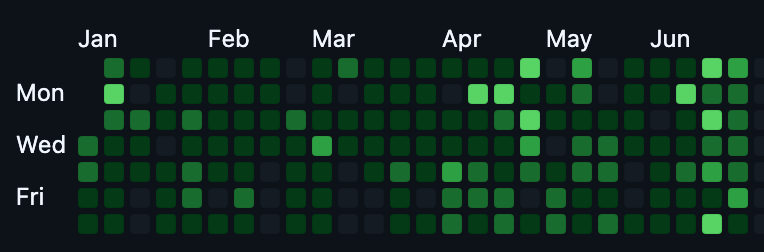
2025 Github Commits
Everything now runs native on Lens V3 Mainnet ZKsync : DIGITALAX Flagship, Chromadin, Cypher Search, Kinora, Listener, Coin Op, The Manufactory, Lucidity, NPC Studio, TripleA, and microbrands like F3M.
We also deployed $MONA to Lens Mainnet, with a custom bridge for moving cross chain.
Over the next few weeks, we’ll be running full re-tests across the entire stack. A lot changed quickly, and the LensSDK went through constant updates in the first few months after launch. Now that the v3 API is stable, we’re going back to clean up any missed transitions from v2, polishing tests and calls that couldn’t be fully covered during the initial refactor.
You might ask, why the move away from Polygon?
A lot has changed. In teams, in values, in the alignment with core web3 principles. And even more critically, in the performance of L2s post Eth2. When it comes to speed, privacy and dev experience, ZK-powered networks are in a completely different class now.
We moved to Lens Mainnet on zkSync because social content is fashion. Not just surface level posts, but full interaction chains for media, coordination and reputation. And that needs to live somewhere composable.
Given how much we’ve already built around Lens, migrating made sense. Gas is lower, interactions are faster, and the build environment stays close to Ethereum without compromising on chain integrity.
The culture is just not there anymore on Polygon. Back in 2021, it was the right choice, but now, it’s slower to evolve, tightly VC-aligned, and not flexible enough for where we’re heading. There are better L2s already live, and more on the way, that are pushing in the right direction.
Content is King
Beyond the code, a whole range of new fashion collections dropped this year across TripleA, F3Manifesto, and Chromadin. A mix of sharp, wear-to-signal statements and designs that pull at the seams of over-processed culture.
On the tooling side, we’ve been deep in refining ComfyUI pipelines especially for local, open source generative video. That’s still the edge right now: model quality, rendering speed, consistent outputs. Wan releases and recent ComfyUI updates pushed things forward, and the workflows have been getting tighter across the board. We’ve also been levelling up the core setup we use to run and experiment, mixing hardware across 3× A6000s, 2× 6000 Adas, and a few single A6000 + 4090 configs in collaboration with pro-artist studios. It’s helped push the limits further on render quality and speed, especially for long-form video workflows and high-fidelity iterative testing.
Content is still the multiplier, especially in fashion. Better tooling here means indie designers don’t have to scale teams to compete. Just run better local infra and outproduce. Traditional gatekeepers become irrelevant when the tools are the credentials. Because I can, and this is fucking cool = computational creative sovereignty.
Web3 Fashion Week 2025
Which makes it the perfect time to launch new runways and the next Web3 Fashion Week , built from everything the GDN and GMS tested in previous digifizzy crossovers. Only now, with stronger tooling and deeper creative reach, especially as AI agents and human influences converge.
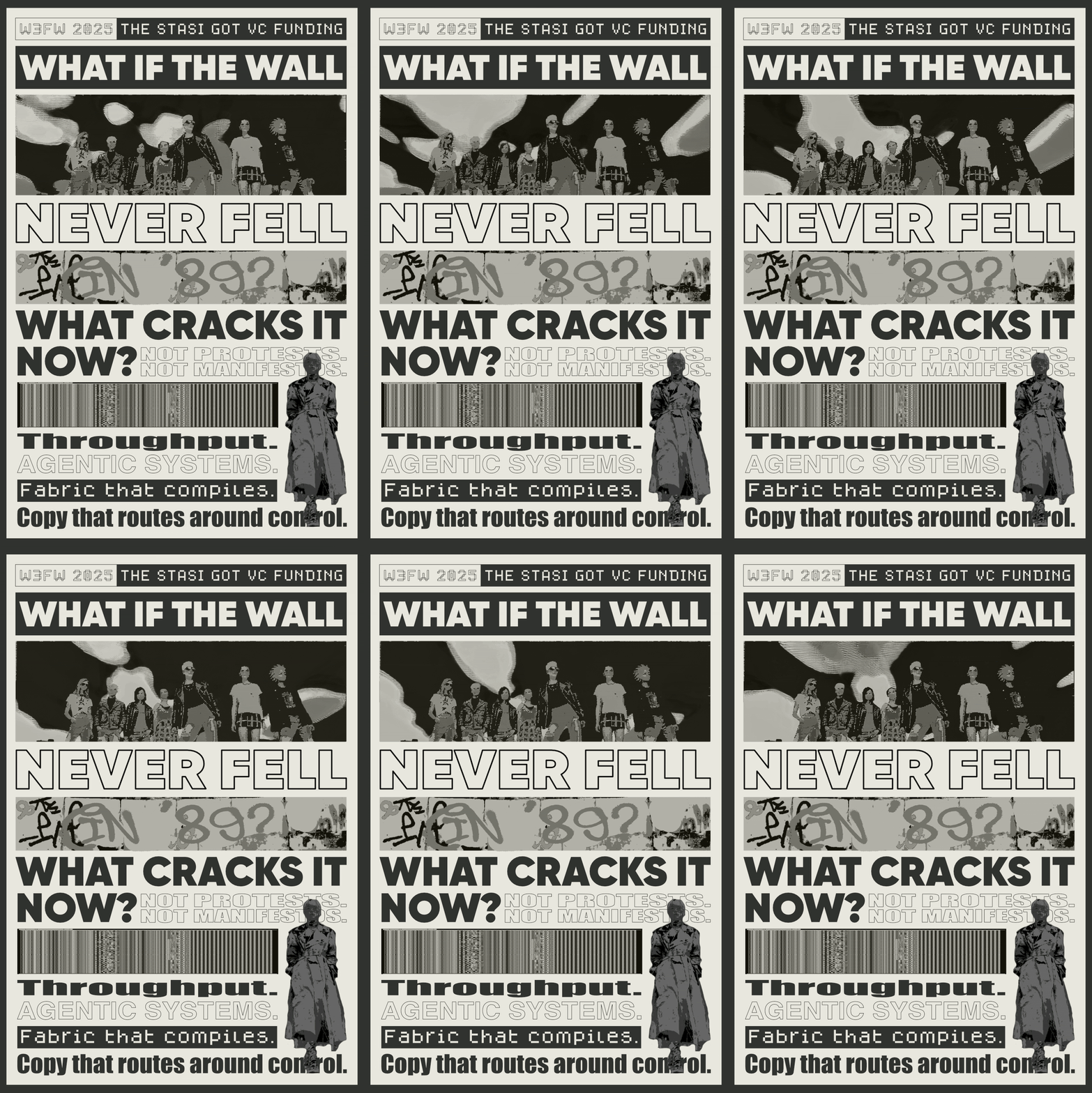
GDR Punk is coming to the runway, the Stasi are back, and computational tools are the cultural levelling force.
The Runway will be broadcast in Q3 at W3FW with exclusive drops, token-gated access, and featured hybrid collections released by the GDN at a brand new market.
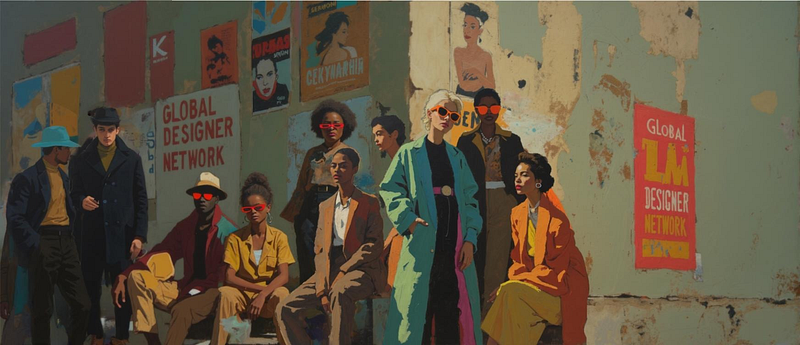
Global Designer Network | DIGITALAX
Next Apps
Work on Skyhunters originally kicked off at the end of last year with the updates around $MONA . It was paused to focus on getting the full stack refactor live. Now, we’ve dived back into the code.
The app and on-chain agents are being finalized, designed to hunt cross-chain and route liquidity into new staking pools on Lens for ecosystem tokens ($MONA, Genesis, PODE, Fashion NFTs etc.). These pools also function as autonomous funding units for devs and designers — an infrastructure level attempt at solving the still unsolved challenge of sustaining full-time indie work in web3. It’s DeFi x Fashion, restructured. Something DIGITALAX has always built toward.
The next stage of this build carries through summer. Details around pools and staking will drop once contracts are finalized on-chain.
Next Comms
On the comms side, with most web2 platforms now fully dysfunctional, our activity has been primarily on-chain, on GitHub, and via Lens for the past few years. We’re also phasing out of Discord.
We’ve launched a Web3 Fashion Forum on Lens to handle questions, feedback, updates. It’s simpler, cleaner, more aligned with how the protocol operates, there are less bots, less noise, and it lives within a contextually coherent home.
We’ve also been refining how content connects across the wider ecosystem, especially through recent video work. A series of linked sites is starting to go live, designed to surface and organise the backlog: years of articles, questions, responses, conversations, release notes, strange edge cases, half-broken experiments, and everything in between.
So anyone can trace back through what’s been done, see what’s shifted, and follow the thread of our story at their own pace. Some links are already active. Others will keep surfacing through the forum as they get pulled up.
Heads down on Skyhunters now. Runways, collections, and videos dropping async.